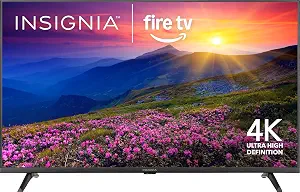
INSIGNIA 55-inch Class F50 Series LED 4K UHD Smart Fire TV with Alexa Voice Remote (NS-55F501NA26)
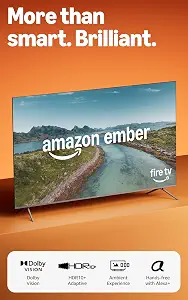
Amazon Ember 55" QLED Series with Fire TV
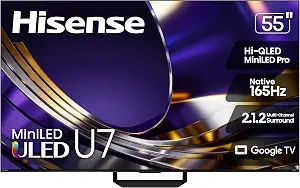
Hisense 55" U7 Mini-LED ULED 4K UHD Smart Google TV (55U7SG)
Best Tv Buying Guide — Black Friday Deals 2026
A Black Friday television search can quickly turn into a contest of labels, but the useful question is which listed features match your room and routine. This guide compares three 55-inch options with different strengths: a 4K LED Fire TV, a QLED Fire TV with local dimming, and a MiniLED Google TV with a listed 165 hertz refresh rate. Those distinctions give you practical starting points, not a universal winner. Before deciding, think about the devices you connect, the display details you value, and the smart-TV environment you prefer. During Black Friday, compare the exact model and offer variant rather than assuming similar names mean identical specifications.
INSIGNIA 55-inch Class F50 Series LED 4K UHD Smart Fire TV with Alexa Voice Remote (NS-55F501NA26)
Check Price on Amazon
This 55-inch INSIGNIA pairs a 4K LED display with FireOS, making it a straightforward candidate for shoppers whose priorities are a familiar smart-TV platform and a clearly stated screen size and resolution. It supports HDR10, and its three HDMI ports give you a concrete number to compare against the devices you plan to connect. Wi-Fi and Bluetooth are listed for wireless connectivity, while Apple AirPlay is included among its additional features. The VESA mount standard is 200 x 200 mm, a detail to check against your mounting plan before choosing a setup.
Its Best Budget label is an editorial fit among the products in this guide, not a claim about a current price or a measured ranking. For a Black Friday shortlist, consider it when you want 4K and FireOS without making the more elaborate display details in the other listings your main deciding factors. The provided facts do not establish what any live offer costs, so judge the exact listing rather than treating the label as proof of a discount.
A household with devices to connect can use the three HDMI inputs as a planning prompt: write down the equipment you expect to attach, then decide whether the available count suits that setup. AirPlay may also matter if sharing content from compatible Apple devices is part of your routine; the listing identifies the feature, but you should confirm the precise compatibility details you need. Likewise, the Bluetooth and Wi-Fi entries identify wireless options without specifying every use or supported device.
For Black Friday, verify that the selected listing is the 55-inch F50 Series model, NS-55F501NA26, and compare its stated 4K resolution, HDR10 support, FireOS, connections, and mounting standard with your checklist. This model is most compelling to consider when those particular basics answer your needs. If your decision hinges on a feature not stated here, such as a particular refresh rate, do not fill in the gap by assumption; check the exact offer details before buying.
Key specs
| Screen size | Screen Size 55 inches |
| Resolution | Resolution 4K |
| HDR format | Screen Finish Led Display HDR Format Supported HDR10 |
| Operating system | Operating System FireOS |
| HDMI ports | Total Number of HDMI Ports 3 |
| Wall mounting | VESA Mount Standard 200 x 200 mm |
| Wireless connectivity | Wireless Technology Bluetooth, Wi-Fi |
| AirPlay | Additional Features Apple Airplay |
Amazon Ember 55" QLED Series with Fire TV
The Amazon Ember 55-inch QLED Series combines a 4K QLED display with Dolby Vision and HDR10+ Adaptive support. It also lists full-array local dimming, Wi-Fi 6, and a new quad-core processor. Those details make it a useful option to examine if your display shortlist includes multiple HDR formats and local dimming, while Wi-Fi 6 and the processor are additional stated specifications rather than guarantees about a particular viewing result. Fire TV gives the set a clearly identified platform, and AirPlay is listed for sharing content from compatible devices.
This is the guide’s Best Overall choice as an editorial recommendation among these three listings, not a test result or a market-wide award. The combination of display, HDR, connectivity, and everyday features makes it a broad candidate for shoppers who do not want to prioritize only one specification. It is still worth asking which of those details you will use: a feature-rich description is useful only when it corresponds to your preferences and setup.
The listing adds some less conventional details to weigh. Built-in sensors wake the display when you enter, and a switch electronically disconnects the microphones. If those functions affect how you want a television to behave in your space, consider them alongside the picture specifications rather than treating them as automatic advantages for every household. Four HDMI inputs also give you a specific connection count to compare with your planned equipment.
During Black Friday, compare the exact Ember 55-inch QLED listing and variant, not just a product-family name or a QLED label. Check that the offer describes the 4K display, the HDR formats, full-array local dimming, and the features relevant to you. Do not assume an advertised deal makes this the right fit, or that a similar-looking offer has the same details. If AirPlay matters, the provided description says it works with compatible devices; check the device-specific requirements you care about before committing.
Key specs
| Display | A 4K QLED display |
| HDR | Dolby Vision and HDR10+ Adaptive |
| Dimming | Full-array local dimming |
| Connectivity | Wi-Fi 6 |
| Processor | a new quad-core processor |
| Sensors | Built-in sensors wake the display when you enter |
| Privacy | a switch that electronically disconnects the microphones |
| HDMI | four HDMI inputs |
| AirPlay | Use AirPlay to share content from compatible devices to your TV. |
Hisense 55" U7 Mini-LED ULED 4K UHD Smart Google TV (55U7SG)
Check Price on Amazon
The Hisense 55-inch U7 combines 4K UHD with Hi-QLED quantum dot color, IMAX Enhanced, and MiniLED Pro. Its listed refresh rate is 165 hertz, and the HDR formats include Dolby Vision, Dolby Vision IQ, HDR 10+, HDR10, and HDR10+ Adaptive. That collection gives shoppers interested in refresh rate and a range of named display formats several specific items to examine. The product name identifies Google TV, so the platform is another point to weigh if you already have a preference about the smart-TV environment.
Its Best for high-refresh-rate shoppers label reflects the listed 165 hertz refresh rate, not a measured superiority claim. If refresh rate is high on your personal checklist, this makes the U7 a natural candidate to compare. If it is not a deciding factor for your viewing habits, give equal attention to the other details you will actually use, including screen size, HDR formats, connections, and placement.
The set lists four HDMI ports, Bluetooth 5.4, and Wi-Fi 6E. Those facts can help you check whether the connection options align with your equipment and wireless setup, without implying compatibility with every device. Its audio output is listed as 50 watts; treat that as a specification to compare with your own priorities rather than a promise about how sound will suit a particular room. The anti-reflection and glare-free screen finish is also worth considering if reflected light is one of the conditions you are evaluating, though the listing does not quantify its effect in your space.
For Black Friday, confirm the exact 55U7SG model and check that the selected offer carries the features you are comparing, especially the 165 hertz listing, the stated display technology, and the connection details. This model may suit a shopper who wants refresh rate near the top of the decision, while someone focused on a different priority may rank the choices differently. Treat each listed specification as a question to resolve against your own needs, not as evidence of an unprovided performance result.
Key specs
| Display technology | 4K UHD, Hi-QLED (Quantum Dot Color), IMAX Enhanced, MiniLED Pro |
| Refresh rate | 165 hertz |
| HDR formats | Dolby Vision, Dolby Vision IQ, HDR 10+, HDR10, HDR10+ Adaptive |
| Screen size | 55 inches |
| Audio output | 50 watts |
| HDMI ports | Total Number of HDMI Ports 4 |
| Wireless connectivity | Bluetooth 5.4, Wifi 6E |
| Screen finish | Anti-Reflection & Glare-Free |
Give the screen a role in your room
All three choices are 55-inch televisions, so screen size alone will not separate this shortlist. Instead, consider where the set will go and what you expect to do in front of it. A television for a shared living area may serve several people and devices; a screen for a quieter space may be chosen around a narrower routine. These are planning questions, not claims that one model is designed for a specific room.
The INSIGNIA listing gives a VESA mount standard of 200 x 200 mm. If you plan to mount it, compare that exact standard with your mounting hardware and intended placement. The supplied details do not include a matching mount or installation guidance, so verify those separately. For the other two televisions, do not infer mounting measurements from their descriptions here; check the exact listing if mounting compatibility will decide your purchase.
Think about reflected light as another room-specific question. The Hisense listing names an anti-reflection and glare-free finish, a detail that may be relevant to your evaluation of the space. It does not quantify results under your lighting conditions. During Black Friday, avoid letting a prominent offer banner hurry this step: settle on your placement and priorities, then compare the exact model details against them.
Separate the picture labels into personal priorities
A resolution label answers a different question from an HDR format or a display-technology name. The INSIGNIA lists 4K resolution and HDR10 support. The Amazon Ember describes a 4K QLED display, Dolby Vision, HDR10+ Adaptive, and full-array local dimming. The Hisense combines 4K UHD with Hi-QLED, MiniLED Pro, IMAX Enhanced, and several named HDR formats. These terms help define what each listing specifies, but they do not establish a direct picture-quality ranking.
Ask which details deserve attention for your own viewing. If you want to compare HDR support, note the formats stated for each exact model rather than assuming that one format name covers another. If local dimming is on your checklist, it is explicitly listed for the Ember. If quantum-dot or MiniLED terminology is important to your research, the Ember and Hisense descriptions identify different display details to investigate. The facts here do not describe brightness, contrast measurements, or how a set looks in your room.
Black Friday product pages can place specifications beside offer information, so keep those decisions separate. First decide which display labels matter; then check that the live offer is for the model whose specifications you intended to compare. A longer list can be a useful prompt for further consideration, but it is not by itself a reason to choose a television.
Match the platform and connections to your routine
The product names and specifications identify two Fire TV options and one Google TV option: the INSIGNIA runs FireOS, the Ember is a Fire TV, and the Hisense is a Google TV. Platform preference can be personal. Consider which interface you want to use day to day, but do not assume details about apps or services that are not stated in these records. If a particular service is essential, confirm its availability on the exact model before making that preference decisive.
Port counts offer a more concrete planning exercise. The INSIGNIA lists three HDMI ports; the Ember and Hisense each list four. Write down the devices you expect to connect and compare that list with the stated inputs. This simple count can help you focus your research, but it does not tell you which HDMI capabilities or cables are included, so verify any specific requirement separately.
Wireless details also differ: the INSIGNIA lists Wi-Fi and Bluetooth, the Ember lists Wi-Fi 6, and the Hisense lists Wi-Fi 6E and Bluetooth 5.4. AirPlay is listed for the INSIGNIA and Ember. These entries can guide questions about your household devices; they do not establish universal compatibility. Before a Black Friday purchase, make sure the exact offer page supports the connection or sharing feature you actually plan to use.
Make the Black Friday offer answer specific questions
A sale label does not tell you whether the television matches your shortlist. Begin by checking the model name and size on the live offer, then compare the specifications that drove your interest. The three products here have different names and feature combinations, so do not assume that a similar series name or a familiar platform guarantees the same configuration. Confirm that the offer is for the model you meant to assess.
Next, identify the decision points you would be disappointed to overlook. Those might be the INSIGNIA’s 4K resolution and three HDMI ports, the Ember’s local dimming and four HDMI inputs, or the Hisense’s listed refresh rate and screen finish. These are examples drawn from the supplied facts, not a universal checklist. If a listing does not answer a question that matters to you, seek confirmation before checkout rather than relying on the Black Friday headline.
Compare the exact offer and variant on their stated terms. This guide provides no live prices, discounts, availability, or seller conditions, so none should be assumed. Keep the model identity, preferred features, and any unresolved requirements together as you review an offer. That process makes Black Friday comparison more useful than treating the largest-looking promotion as the deciding factor.
Choose convenience features only when they solve a need
Small features can shape the daily experience, but their value depends on the person using the television. The Ember lists sensors that wake the display when you enter and a switch that electronically disconnects its microphones. Consider whether those functions matter to your preferences before allowing them to influence the decision. Their presence is a stated feature, not a promise that every household will want the same behavior.
The INSIGNIA and Ember both list AirPlay, with the Ember description specifying sharing from compatible devices. If that is part of your routine, confirm compatibility for the devices you intend to use. The INSIGNIA also lists an Alexa Voice Remote in its product name; the details supplied here do not describe particular voice functions, so check the listing for the capabilities you need. The Hisense listing provides an audio-output figure of 50 watts, which you can weigh if that specification matters to your comparison.
During Black Friday, convenience details can get lost among display terminology and offer messaging. Make a short list of functions that would genuinely simplify your use, then verify each against the exact product page. If a feature is merely interesting rather than important, avoid letting it outweigh a core requirement such as the platform, ports, or display specification you already identified.
Make your Black Friday choice
The right choice depends on which stated details answer your questions: the INSIGNIA emphasizes 4K, FireOS, and a defined set of connections; the Ember combines QLED, local dimming, and several everyday features; and the Hisense puts a listed 165 hertz refresh rate alongside its display and connectivity details. Use the recommendations as guideposts, not proof of measured superiority. For Black Friday, confirm the exact model and offer variant, check the features that matter to your setup, and pause on anything the listing leaves unclear. A deliberate comparison is more useful than choosing by promotion language alone.