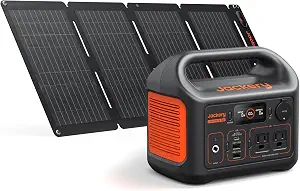
Jackery Solar Generator 300 and 40W Solar Panel
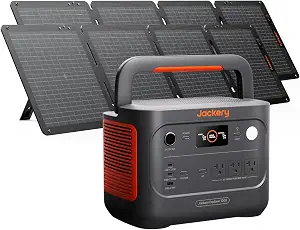
Jackery Solar Generator 1000 v2 and 2x100W Solar Panel,1024Wh LiFePO4
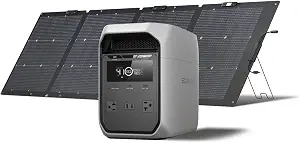
EF ECOFLOW Solar Generator Delta 3 Classic with 220W Solar Panel, 1024Wh
Best Solar Generator Buying Guide — Black Friday Deals 2026
A solar generator purchase starts with two separate questions: how much energy you want stored and how much power your equipment needs at once. The compact Jackery, two 1024Wh bundles, and their different output and panel details create distinct paths rather than one universal choice. For Black Friday, compare the exact product and package shown in the offer—not just a headline or product-family name. First list the equipment you hope to connect, then check its power requirements against the generator’s output and ports. Next decide whether the included panel configuration suits your plans. The recommendations below explain what each listing establishes, and what you should verify before choosing.
Jackery Solar Generator 300 and 40W Solar Panel
The Jackery Solar Generator 300 and 40W Solar Panel earns the Best Budget label here because it is the smallest-capacity configuration in this selection: 292Wh, paired with a 300W AC output and a named 40W solar panel. That description makes it a natural candidate to consider when your plan is deliberately limited to a smaller set of equipment. The label is a guide to how this package fits the comparison, not a statement about its actual Black Friday price or a claim that it is the least expensive offer.
The output details are specific enough to help you rule the package in or out. It has 300W rated output and a 600W peak surge, so check the device requirements against the appropriate figure rather than treating peak output as the normal operating ceiling. Its capacity is 292Wh; that number describes stored energy, not a guaranteed operating duration. Before you buy, identify which equipment you would connect at the same time and verify that the combined requirements fit the stated output. The 100W USB-C PD port, two USB-A ports, two AC outlets, and 120W car port give you several connection types to compare with your actual cables and devices.
LiFePO4 chemistry is another listed detail to weigh, but it does not answer every question about how the generator will suit your routine. Consider where you would keep it and which connections you expect to use most. The product name identifies a 40W solar panel in the package; check the exact Black Friday listing to make sure the offer you are considering matches that configuration. The provided details do not state a recharge time for the panel, so don’t infer one from its wattage. This Jackery makes most sense to shortlist when its capacity and output fit your planned loads and its port mix matches your equipment—not simply because a sale page calls it a deal.
Key specs
| Capacity and AC output | 292Wh,300W AC |
| Ports | 2 AC outlets, a 100W USB-C PD port, 2 USB-A ports, and a 120W car port. |
| Rated and peak output | 300W rated output (600W peak surge) |
| Battery chemistry | LiFePO4 chemistry |
Jackery Solar Generator 1000 v2 and 2x100W Solar Panel,1024Wh LiFePO4
Check Price on Amazon
The Jackery Solar Generator 1000 v2 and 2x100W Solar Panel is the Best Overall pick among these three options because its supplied details combine a 1024Wh capacity with 1,500W AC output and two included 100W solar panels. That gives a shopper comparing the listed configurations a useful middle point to investigate: it has substantially more stated stored energy than the compact Jackery, while the EcoFlow listing specifies higher AC output. The label is an editorial choice within this guide, not a claim of measured superiority.
For an outage plan, a household task, or a trip, begin by writing down the devices you want to use and checking their power requirements. The generator’s 1,500W AC output and 3,000W surge peak describe different limits; don’t treat the surge figure as the ordinary output available for ongoing use. Its 1024Wh capacity is a separate figure, not a promise of how long any particular device will run. The 10ms UPS switchover may matter if you are considering backup for equipment that needs a quick transition. Confirm whether that behavior fits the specific setup you have in mind rather than assuming it guarantees uninterrupted operation for every device.
The listed weight is 23.37 Lbs, so include moving and positioning the unit in your decision, especially if you expect to relocate it regularly. The two 100W panels are part of the named package; check the live Black Friday offer to confirm the exact configuration and included contents before comparing it with another bundle. Avoid assuming a particular recharge time from panel wattage alone, since the supplied details do not give one for this package. As you review Black Friday listings, make sure the product name, panel count, and specifications all describe the same offer. Choose this configuration if its stated capacity, output, switchover detail, and bundled panels align with your own checklist.
Key specs
| Capacity | 1024Wh |
| AC output | 1,500W AC output |
| Surge output | 3,000W surge peak |
| UPS switchover | 10ms UPS switchover |
| Weight | 23.37 Lbs |
| Included solar panels | 2 * 100W Solar Panels |
EF ECOFLOW Solar Generator Delta 3 Classic with 220W Solar Panel, 1024Wh
Check Price on Amazon
The EF ECOFLOW Solar Generator Delta 3 Classic with 220W Solar Panel is the Best for Higher AC Output choice in this guide. Its stated 1800W output and 3600W surge give shoppers a distinct output profile to compare with the other listed models. That label reflects the provided specification, not a test result or a claim that the generator is the best choice for every use. Its 1024Wh capacity is also stated, so consider energy storage separately from the power available at a given moment.
This package may be worth examining when the equipment on your list makes AC output a central question. Write down the power needs for each device, check what you expect to use together, and compare that plan with the 1800W output. Keep the 3600W surge figure in its own column: it is not a substitute for the normal output figure. The listing also specifies a 100W USB-C output, which may be relevant if that connection matches an item you plan to charge. A LiFePO4 battery is specified. These details help you narrow a shortlist, but they do not establish how long a particular setup will run or whether every device is suitable.
The named bundle includes a 220W bifacial solar panel, and the listing states a recharge time of 5.8 hours with a 220W solar panel. Keep that claim attached to its stated condition rather than treating it as a guarantee for every situation. On Black Friday, check that the live offer is for the Delta 3 Classic configuration with the panel, and read the panel and recharge details together. The product also specifies that it automatically switches to battery in under 10ms. If backup transfer is a priority, compare that detail with the requirements of your equipment and plan; don’t assume a transfer specification alone settles compatibility. The strongest reason to consider this option is its stated AC output, balanced against your actual energy and bundle needs.
Key specs
| Output | 1800W output (3600W surge) |
| USB-C output | 100W USB-C Output |
| Battery | LiFePO4 Battery |
| UPS transfer | automatically switches to battery in under 10ms |
| Solar recharging | Recharge in just 5.8 hours with a 220W solar panel. |
| Solar panel | 220W bifacial solar panel |
Begin with the equipment you want to support
Before browsing, make a short list of the devices you want a generator to serve. Note which connections each one needs and the power requirements shown on its own documentation. If you expect to use several devices together, think about their combined demand rather than assessing each in isolation. This first pass can quickly show whether a compact, lower-output option deserves attention or whether you should compare the higher stated AC outputs of the larger configurations. It also prevents a bundle’s panel wattage or a product-family name from taking the place of a real equipment check.
Then separate “how much can it supply at once?” from “how much energy is stored?” The Jackery 300 listing gives 292Wh and 300W rated output, while both larger packages specify 1024Wh. The Jackery 1000 v2 lists 1,500W AC output; the Delta 3 Classic lists 1800W output. These figures answer different questions, and capacity alone cannot tell you how long a specific appliance will run. Black Friday comparisons become more useful when you keep capacity, ordinary output, and surge in separate notes. Check each device’s requirements against the relevant generator specification before deciding which package merits a closer look.
Choose a capacity that fits your intended routine
Think through a realistic use period rather than choosing a capacity by appearance or by the largest number on the page. Which devices would you power, how often would they be used, and which would need to operate at the same time? The product facts here provide capacity figures, but not runtime estimates for particular devices. Treat 292Wh and 1024Wh as comparison points, then make your decision with your equipment’s demands in view. If you cannot estimate those demands, pause and gather them before treating any generator as a match.
A larger capacity does not by itself resolve the output question, and a higher output does not by itself tell you how long a device can be supported. The two 1024Wh packages differ in their stated AC output, panel bundle, and backup-transfer details. That makes the right choice dependent on the job you have in mind. During Black Friday, compare the exact variants side by side and resist the urge to let a headline capacity settle the decision. Ask whether the stored energy, output ceiling, and planned use all line up, and note any missing information you would need to confirm from the actual offer.
Compare the panel package with your charging plan
A bundled panel is part of the configuration, so identify exactly what the listing says is included. The compact Jackery’s name specifies a 40W solar panel; the Jackery 1000 v2 package lists two 100W panels; the Delta 3 Classic package names a 220W bifacial panel. Those differences give you a starting point for comparing offers, but they do not establish that one package will recharge faster in every circumstance. Avoid turning panel wattage into a recharge-time promise when the product details do not provide one.
The EcoFlow listing does state recharge in 5.8 hours with a 220W solar panel. Keep that claim with its stated panel condition when you consider it; don’t automatically apply it to another panel, bundle, or charging situation. On Black Friday, confirm the exact bundle contents and check that the configuration in the offer matches the product you intended to compare. If you are deciding between panel bundles, ask what you need the panel to do and what recharge information is actually given. Treat unspecified details as questions to verify, not as reasons to assume a particular result.
Check connections and transfer details for your setup
Port lists are useful only when you compare them with the devices and cables you expect to use. The Jackery 300 specifies two AC outlets, a 100W USB-C PD port, two USB-A ports, and a 120W car port. Those named connections let you check your own equipment against the listed options, but don’t assume that an outlet count answers every connection or simultaneous-use question. The Delta 3 Classic specifies a 100W USB-C output. For the Jackery 1000 v2, the provided details here focus on capacity, output, surge, UPS switchover, weight, and panels, so consult the live offer for any further port information you need.
Backup transfer deserves its own check. The Jackery 1000 v2 lists a 10ms UPS switchover, and the Delta 3 Classic says it automatically switches to battery in under 10ms. If you hope to use one of these for equipment that depends on backup behavior, compare the stated transfer detail with that equipment’s requirements. A specification is not a universal guarantee that every setup will behave as expected. Black Friday is a good time to verify the exact model and variant, then confirm any connection or backup question that matters to your intended use before checkout.
Read the Black Friday offer as a specific configuration
A Black Friday label does not tell you which generator variant or panel package is in the offer. Read the full product name and compare it with the configuration you shortlisted: the Jackery 300 with a 40W panel, the Jackery 1000 v2 with two 100W panels, or the Delta 3 Classic with a 220W panel. Confirm that the displayed specifications and bundle contents refer to the same item. This is particularly important when comparing two packages with similar capacity figures but different output, panels, or transfer information.
Use the actual offer details to resolve questions, not assumptions about a sale. Check that the product identity matches, the included panels are specified as expected, and the attributes you care about are present in the listing. No price or discount can be inferred from the product facts in this guide, so compare the live offer directly rather than treating “Black Friday” as proof of a particular value. If the offer does not answer an important question—such as a connection detail or a recharge condition—seek confirmation before choosing. A careful configuration check makes the comparison more meaningful than the event label alone.
Account for where the generator will be kept
Your plan includes storage and handling, not only electrical figures. The Jackery 1000 v2 has a listed weight of 23.37 Lbs; that is a concrete detail to consider if you expect to move or position it. The supplied facts do not give weights for the other two models, so don’t assume how they compare in portability. Instead, think about where each unit would stay, how you would place its panel when needed, and whether the package suits the spaces you have available. Confirm any dimensions or handling details you consider essential in the actual listing.
Also consider how often the generator would be used and which parts of the package would matter in that routine. A bundled panel may be useful to your plan, but its presence alone does not settle storage, placement, or recharge expectations. Black Friday can bring several configurations into view at once; keep your intended location, equipment list, and preferred connections beside the offer as you compare. The final choice should fit the practical arrangements you can verify, as well as the stated capacity and output. If an important handling detail is not supplied, treat it as an open question rather than filling in the gap yourself.
Make your Black Friday choice
A short, equipment-first checklist can make the Black Friday choice clearer: match your devices to the listed output and ports, keep capacity separate from runtime, and decide how much the panel bundle and backup-transfer detail matter. Consider the Jackery 300 when its compact configuration’s stated capacity and connections fit your plan; compare the two 1024Wh options by their distinct output and panel details. Before acting on any Black Friday offer, verify the exact model, variant, and included contents on the live listing. The best fit is the one whose documented details answer your specific needs—not the one with the most persuasive event label.