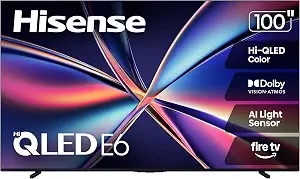
Hisense 100" Class E6 Series QLED 4K UHD Smart Fire TV (100E6QF, 2025 Model)
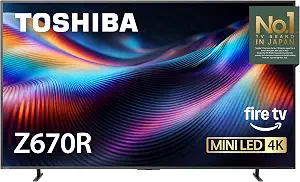
Toshiba 100" Z670 Series Mini-LED 4K UHD Smart Fire TV (100Z670R)
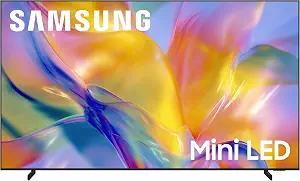
Samsung 100-Inch Class M90H Series, Mini LED, 4K, Smart TV, 2026 Model
Best Size100Inch Tv Buying Guide — Black Friday Deals 2026
A television with a 100-inch screen is a substantial purchase, so the right choice depends on more than the diagonal size. This guide compares three 4K options through details the listings establish: display technology, refresh rate, HDR formats, connections, audio, and smart platform information. The Hisense combines QLED and Fire TV details with a specified built-in audio system; the Toshiba lists four HDMI ports; and the Samsung identifies Bluetooth and Wi-Fi connectivity. Those are useful starting points, not proof that one set will suit every room or device collection. During Black Friday, compare the exact model and variant shown in the offer, then weigh its confirmed features against your own priorities.
Hisense 100" Class E6 Series QLED 4K UHD Smart Fire TV (100E6QF, 2025 Model)
Check Price on Amazon
Best Overall is an editorial pick among the televisions in this guide, not a claim of measured superiority. The Hisense 100E6QF brings together a 100-inch screen, LCD, LED, and QLED display technology, and 4K resolution. Its listed 144 hertz refresh rate and support for Dolby Vision, HDR10, HDR10+ and HDR10+ Adaptive, and HLG give shoppers several concrete picture-format details to compare with the content and devices they use. Those specifications identify what is listed; they do not establish how a particular program, room, or viewing position will look.
The audio and platform information make this model especially straightforward to assess on paper. Hisense specifies built-in 2.1 ch speakers with Dolby Atmos and 50W total output power, along with FireOS. If you want the television itself to provide specified audio rather than making sound a separate initial checklist item, those details give you a defined starting point. Consider whether the listed audio configuration and smart platform align with your plans, but do not treat the specification as a guarantee of how sound will suit your room or which services you will use.
For a Black Friday comparison, verify that the offer names the 100E6QF, 2025 Model, rather than relying on a broad Hisense or screen-size description. Then compare the exact listing’s confirmed specifications with the details that matter most to you: the listed HDR formats, the FireOS platform, or the built-in audio configuration. The supplied facts do not give a price, a promotion, or connection counts for this model, so check the live listing for any information you need before deciding. This pick is useful for shoppers who value a combination of specified display, audio, and platform details in one shortlist candidate.
Key specs
| Screen size | 100 inches |
| Display technology | LCD, LED, QLED |
| Resolution | 4K |
| Refresh rate | 144 hertz |
| HDR formats | Dolby Vision, HDR10, HDR10+, HDR10+ Adaptive, HLG |
| Audio | Built-in 2.1 ch speakers with Dolby Atmos, 50W total output power |
| Operating system | FireOS |
Toshiba 100" Z670 Series Mini-LED 4K UHD Smart Fire TV (100Z670R)
Check Price on Amazon
Best for HDMI-connected setups is a label grounded in one clear listing detail: the Toshiba 100Z670R has four HDMI ports. That gives shoppers who plan to connect multiple HDMI devices a specific port count to compare against their own equipment list. It does not identify the capabilities of each port or establish that every device can be connected in a particular arrangement, so check the full listing and your device requirements before treating the count as a complete connection answer.
The Toshiba is listed with a 100-inch screen in its product name, Mini LED and QLED display technology, and 4K resolution. Its specified refresh rate is 144 hertz. The supported HDR formats are Dolby Vision, HDR10, HDR10+ and HDR10+ Adaptive, and HLG. These details can help narrow a shortlist if you are comparing the display technologies, resolution, refresh rate, or HDR-format lists that matter to your viewing plans. They should be read as specifications, not as a guarantee of image quality or a ranking against another model.
The listing also gives a VESA mount standard of 800 x 400 mm. That is useful when you are checking whether a planned mounting setup matches the stated standard; it does not confirm the suitability of a particular mount, wall, or installation. Before Black Friday, keep the complete model name visible in your comparison and check any fit questions against the exact listing. The supplied facts do not specify audio or smart-platform details for this Toshiba, so leave those as open questions rather than assuming an answer. Its defined HDMI count and display information make it a practical candidate to investigate when connected devices shape your decision.
Key specs
| Display | Display Technology Mini Led, QLED |
| Resolution | Resolution 4K |
| Refresh rate | Refresh Rate 144 hertz |
| HDR formats | HDR Format Supported Dolby Vision, HDR10, HDR10+, HDR10+ Adaptive, HLG |
| HDMI ports | Total Number of HDMI Ports 4 |
| Mount standard | VESA Mount Standard 800 x 400 mm |
Samsung 100-Inch Class M90H Series, Mini LED, 4K, Smart TV, 2026 Model
Check Price on Amazon
Best for Bluetooth and Wi-Fi connectivity is an editorial label based on the Samsung M90H listing’s stated wireless technologies: Bluetooth and Wi-Fi. If wireless connectivity is central to your shortlist, this gives you a direct point to check against the devices and setup you have in mind. The listing does not specify particular wireless uses or compatibility, so confirm any device-specific requirement rather than assuming that the stated technologies settle it.
This 2026 model is identified as a 100-inch-class television with Mini-LED backlight technology and 4K resolution. Its listed refresh rate is 144 hertz, and its supported HDR format is HDR10+. The format list is narrower than the lists provided for the Hisense and Toshiba, but that is only a difference in the supplied specifications; it does not establish how content will look or which set is preferable. Use the listed information to decide which details you want to investigate further, especially if a particular HDR format is important to your viewing plans.
Samsung lists three HDMI ports and two USB ports, in addition to Bluetooth and Wi-Fi. Compare those counts with the devices you expect to connect, while checking the exact listing for any port capability or connection detail your setup requires. The supplied facts do not name the operating system or describe built-in audio, so those may be questions to resolve before purchase. For Black Friday, confirm that the offer is for the M90H Series, 2026 Model, and compare the actual variant rather than treating a broad brand or screen-size label as enough. This pick suits a shopper whose initial decision filter includes the explicitly listed wireless technologies.
Key specs
| Resolution | Resolution 4K |
| Backlight | Display Backlight Technology Mini-LED |
| Refresh rate | Display Refresh Rate in Hertz 144 |
| HDR format | HDR Format Supported HDR10+ |
| HDMI ports | Total Number of HDMI Ports 3 |
| USB ports | Total Usb Ports 2 |
| Wireless connectivity | Wireless Technology Bluetooth, Wi-Fi |
Begin with the content and formats you care about
A 4K resolution appears in the specifications for all three televisions, so it can serve as a shared starting point rather than the only deciding factor. The display descriptions differ: the Hisense lists LCD, LED, and QLED; the Toshiba lists Mini LED and QLED; and the Samsung specifies Mini-LED backlight technology. Keep those descriptions attached to their exact models when comparing them. The supplied facts do not establish a performance ranking among these display technologies, so choose based on which details you want to investigate rather than assuming a label guarantees a particular result.
Refresh rate is another shared specification: each listing states 144 hertz. HDR information varies. Hisense and Toshiba list Dolby Vision, HDR10, HDR10+ and HDR10+ Adaptive, and HLG, while Samsung lists HDR10+. If a format is relevant to the content or equipment you use, treat the format list as a question to check against your needs. It is not a promise that all content will use every format. During Black Friday, compare the exact model’s full specification list; a short offer headline may not contain the distinctions that matter to you.
Black Friday: compare the complete model identity
An event label does not tell you which exact television an offer covers. Keep the model identifier beside each candidate: Hisense 100E6QF, Toshiba 100Z670R, or Samsung M90H Series. The Hisense is identified as a 2025 Model and the Samsung as a 2026 Model; the Toshiba listing supplies its 100Z670R model name. Check that the model and variant in the live offer match the one you meant to compare. Do not infer that similar branding or a shared screen size means two listings have identical specifications.
Compare the offer using details that can be verified in the listing, such as the stated resolution, refresh rate, HDR formats, and connection counts where provided. Then consider the price and terms displayed for that exact offer without assuming that a Black Friday banner means a promotion is active or that one offer is better value. The supplied product information does not include prices, discounts, availability, or seller policies. If those affect your decision, inspect the current listing directly and make your own comparison using the same model identity throughout.
Make room planning part of the shortlist
Before choosing a screen this large, picture how it will fit into your everyday viewing space. Measure the area where you plan to place it and consider whether the screen’s position works with your seating and the room’s layout. The product facts establish that each selection is associated with a 100-inch screen or class, but they do not provide complete cabinet dimensions, weight, stand footprint, or delivery requirements. Look up those specifics for the exact model before making a final fit decision; do not substitute the screen-size label for a physical measurement.
Mounting deserves its own check. The Toshiba listing specifies a VESA mount standard of 800 x 400 mm, which gives you a stated standard to compare with a planned mounting arrangement. It does not establish that a particular mount or wall is suitable. The supplied facts do not give mounting standards for the Hisense or Samsung, so verify those details in their listings if you intend to mount either set. Black Friday timing should not rush this step: first establish that your intended location and installation plan are workable, then compare the offer for the exact model.
Let your equipment determine the connection questions
Write down the devices you expect to use with the television before comparing port counts. Toshiba lists four HDMI ports, Samsung lists three HDMI ports and two USB ports, and the provided Hisense facts do not state counts for those connections. These figures help distinguish what is explicitly documented, but they do not describe each port’s capabilities or tell you how a particular setup will work. Check the full product listing for any connection requirement that matters to your equipment rather than relying on a count alone.
Wireless details also vary in what the supplied records establish. Samsung explicitly lists Bluetooth and Wi-Fi. Hisense identifies FireOS as its operating system, while the provided Toshiba facts do not specify an operating system or wireless technologies. Missing information is a reason to check, not evidence that a feature is absent. During Black Friday, use the exact model listing to resolve any compatibility or connection question that could affect your setup. Avoid treating a general product title as confirmation of a specific device pairing or port function.
Black Friday: separate audio and platform needs
The Hisense is the only one of these three for which the supplied facts describe built-in audio: 2.1 ch speakers with Dolby Atmos and 50W total output power. That information lets you compare a specified audio configuration with your own expectations, but it cannot predict how it will sound in your room. The provided Toshiba and Samsung facts do not describe their audio, so check their listings if built-in sound is a deciding factor. Do not treat a missing detail in this guide as proof that a television lacks a feature.
Platform information is similarly specific. Hisense lists FireOS, and its product name identifies it as a Smart Fire TV. The supplied information does not name the Toshiba or Samsung operating systems. If a platform affects your everyday routine, verify the exact model’s listing and consider which services or controls you personally need; no unsupported compatibility should be assumed. A Black Friday offer is worth comparing only after these practical questions are clear. Look at the exact model and confirmed features, then decide whether the displayed offer suits your priorities rather than relying on an event label.
Make your Black Friday choice
The strongest shortlist begins with a question you can answer from the facts: do you value the Hisense’s specified audio and FireOS details, the Toshiba’s four HDMI ports and stated mount standard, or the Samsung’s listed Bluetooth and Wi-Fi? Then check room fit, device needs, and any missing specifications against the exact product listing. During Black Friday, compare the actual model and offer rather than assuming a banner establishes a discount or a match. These three televisions share 4K resolution and a listed 144 hertz refresh rate, but their other documented details point to different priorities. Choose the one whose confirmed features fit your plan, and resolve unanswered questions before buying.