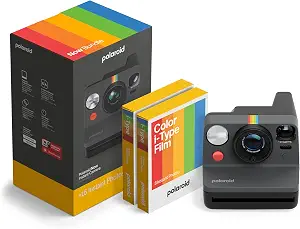
Polaroid Now 3rd Generation I-Type Instant Camera + Film Bundle – Now Black Camera + 16 Color Photos
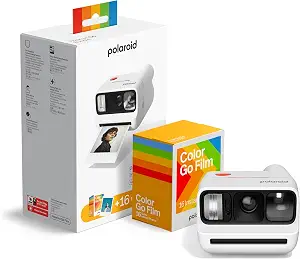
Polaroid Go Generation 3 Bundle – Mini Instant Film Camera + 16 Color Photos – White
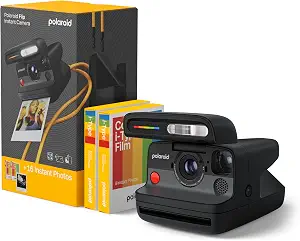
Polaroid Flip Instant Camera + Color Film Bundle (16 Photos Included) – Black (6565)
Best Polaroid Camera Buying Guide — Black Friday Deals 2026
Choosing a Polaroid camera for Black Friday starts with practical questions, not a promised bargain: which film format will you keep buying, what shooting aids suit your routine, and what does the particular bundle include? These three options come with color photos, but their film compatibility and features differ. The Now accepts i-Type and 600 Film; the Go is limited to Polaroid Go Film; and the supplied Flip details emphasize focus and exposure guidance without naming its film compatibility.
Treat any Black Friday listing as a specific camera-and-bundle offer, then verify that the live variant matches the one you want. The recommendations here are editorial fits based on the supplied features, not test results or claims about current deals. A little planning around film, shooting habits, and the setting where you expect to take pictures can help narrow the choice before checkout.
Polaroid Now 3rd Generation I-Type Instant Camera + Film Bundle – Now Black Camera + 16 Color Photos
Check Price on Amazon
Best Overall is a useful fit for shoppers who want a straightforward starting point with several practical choices spelled out. This Polaroid Now 3rd Generation bundle pairs the Now Black Camera with 16 Color Photos. For a Black Friday purchase, the included film gives you a defined first package to compare, while compatibility with both Polaroid i-Type and 600 Film gives you two named formats to consider for future purchases. That flexibility is a concrete reason to shortlist it; it does not establish what either film will cost or whether a particular offer is good value.
The camera uses automatic exposure and has an optical viewfinder. Those details suit a shopper who prefers to frame through a viewfinder and have exposure control handled automatically, rather than making a choice based on controls not listed here. Self-timer and Double Exposure modes offer two specific ways to approach a picture: setting up a timed shot or creating a double-exposure image. Think about whether those options match the occasions you have in mind before treating them as useful extras.
USB-C rechargeable is another clearly stated detail to weigh against your own charging setup. It tells you the charging connection, but not how long a charge lasts or how quickly it recharges. The camera is explicitly described as not water resistant, so plan to use it with care around rain, splashes, or other wet conditions rather than assuming it is protected. That qualification matters when deciding whether your usual picture-taking settings suit this model.
For a Black Friday comparison, check that the listing names the Now Black Camera and the 16 Color Photos bundle, then confirm the product variant before making a decision. The i-Type and 600 Film compatibility, viewfinder, automatic exposure, and two named modes make a clear checklist of what this option establishes. Best Overall is an editorial label for its combination of stated film compatibility and shooting details among these choices—not a claim that it will suit every buyer or outperform the other cameras.
Key specs
| Included film | Now Black Camera + 16 Color Photos |
| Film compatibility | Shoots Polaroid i-Type & 600 Film |
| Camera modes | Self-timer, Double Exposure |
| Viewfinder | Optical viewfinder |
| Exposure control | Automatic |
| Charging | USB-C rechargeable |
| Water resistance | Not Water Resistant |
Polaroid Go Generation 3 Bundle – Mini Instant Film Camera + 16 Color Photos – White
Check Price on Amazon
Best Budget is the assigned editorial label for the Polaroid Go Generation 3 Bundle, which comes with 16 Color Photos. The facts here establish the bundle contents, not a price or a Black Friday discount, so compare the live offer rather than assuming the label guarantees the lowest cost. The key decision is whether this camera’s stated film system and features fit your plans. It is compatible only with Polaroid Go Film, a limitation to keep in view if you expect to continue buying film after using the included photos.
The Go has a built-in flash and automatic exposure. Those features are useful to consider if you want those specific aids available in the camera, though the details do not establish how a particular scene will look. A front-facing selfie mirror provides a clearly identified aid for framing self-portraits. The camera also has Double-exposure and Self-timer modes, giving you options to explore when you want a composed timed shot or a double-exposure image. Decide whether you are likely to use these before letting a feature list make the choice for you.
Its listed dimensions are 4.2 x 3.3 x 2.54 inches. Keep that exact measurement in mind when considering where you will store or carry the camera, and compare it with your own bag or storage space if fit matters. The supplied details call it a mini instant film camera, but the dimensions are the concrete reference provided here; avoid assuming anything about weight or how it feels in hand.
During Black Friday shopping, confirm that the offer is the white Polaroid Go Generation 3 bundle and includes 16 Color Photos. Then check that the film you intend to replenish is Polaroid Go Film, since the listed compatibility is exclusive to that format. Best Budget is a way to identify this option in the guide, not evidence of its current price or a market-wide value ranking. Its selfie mirror, modes, dimensions, and film restriction give you specific points to match against your own priorities.
Key specs
| Bundle contents | 16 Color Photos |
| Flash | Built In Flash |
| Exposure control | Automatic |
| Selfie feature | front-facing selfie mirror |
| Shooting modes | Double-exposure & Self-timer modes |
| Dimensions | 4.2 x 3.3 x 2.54 inches |
| Film compatibility | only compatible with our tiny Polaroid Go Film |
Polaroid Flip Instant Camera + Color Film Bundle (16 Photos Included) – Black (6565)
Check Price on Amazon
Best for Focus Guidance is the editorial label for the Polaroid Flip Instant Camera + Color Film Bundle, which includes 16 Photos. The standout stated feature is its autofocus approach: sonar waves assess the subject and the camera selects the correct lens. The listing also describes a hyperfocal 4-lens system. If you want the camera to provide a defined form of subject and lens guidance, those details make the Flip worth considering. They describe how the system is presented, but do not guarantee results in every scene.
There is also scene analysis that alerts you when a shot is overexposed or underexposed, or when the subject is too close. That feedback may matter if you value warnings before taking a picture. Consider whether those prompts would be useful for the kinds of pictures you plan to make, rather than treating them as a substitute for deciding how you want to frame a subject. The optical viewfinder is another specified composition aid.
The Flip has automatic flash, with power capable of adapting according to subject distance up to 4,5 meters away. Keep that qualification as written when weighing it: the provided detail describes distance-based flash adjustment within that stated reach, not a promise about lighting in every environment. A tripod mount is listed, which may be relevant if you plan to use a tripod for a setup. Maximum shutter speed is listed as 1/100s; consider that specification only in relation to the information you want to compare, rather than inferring broader performance from it.
For a Black Friday listing, verify the exact Flip bundle and its stated 16 Photos, then look for the camera variant you intend to buy. The supplied facts do not specify film compatibility, charging, dimensions, or water resistance, so check the live product information if any of those details affect your decision. Best for Focus Guidance reflects the autofocus and scene-alert features specifically; it is not a claim that the Flip is universally easier to use or a measured winner over the Now or Go.
Key specs
| Autofocus | The Flip uses sonar waves to assess the subject of your shot and then selects the correct lens |
| Lens system | Hyperfocal 4-lens system |
| Flash | Automatic Flash |
| Flash adjustment | capable of adapting its power according to the distance of your subject – up to 4,5 meters away. |
| Exposure alerts | the Flip’s Scene analysis alerts you when your shot is over or underexposed, and when your subject is too close. |
| Viewfinder | Optical viewfinder |
| Tripod | Tripod Mountable |
| Maximum shutter speed | Maximum Shutter Speed 1/100s |
Film plans can make the first cut
Before comparing modes or camera finishes, decide which film system you are willing to keep replenishing. The Now is listed as compatible with Polaroid i-Type and 600 Film, while the Go is compatible only with Polaroid Go Film. Those are materially different shopping considerations: one choice has two named compatible formats, and the other is tied to its own tiny film format. The details supplied for the Flip do not state its compatibility, so confirm that information on the exact listing if film format will determine your shortlist.
The included photos are a starting package, not proof of how much future film will cost. The Now bundle names 16 Color Photos, the Go bundle includes 16 Color Photos, and the Flip bundle states 16 Photos. Compare those descriptions as written and check the live listing to make sure the selected variant matches. Do not assume that a camera bundle’s headline settles later replenishment needs.
Black Friday can make it tempting to focus on the bundle in front of you, but a format you do not plan to continue buying may be a poor fit regardless of the offer. Check the film name, bundle contents, and variant together. If you already have a film plan, use compatibility to remove unsuitable choices first; if you do not, identify which format you are prepared to use before deciding that an included pack makes one camera preferable.
What kind of help belongs in your pictures?
The cameras offer different kinds of stated shooting assistance, so match the feature to a real picture-making habit. The Now has an optical viewfinder and automatic exposure, plus Self-timer and Double Exposure modes. The Go also offers automatic exposure and has a built-in flash, front-facing selfie mirror, Double-exposure mode, and Self-timer mode. The Flip combines an optical viewfinder with autofocus described as sonar-based subject assessment and lens selection, along with scene alerts for exposure or a subject that is too close.
Imagine the moments you most often want to capture. If you expect to frame self-portraits, the Go’s selfie mirror is a specifically relevant detail. If you want to make timed or double-exposure pictures, compare the mode names on the Now and Go. If warnings about exposure or subject distance would be useful, the Flip’s scene analysis is the listed feature to examine. These observations help map specs to intent, but they do not predict which camera will produce a preferred image.
For a Black Friday decision, separate the aid you will use from the one that merely sounds appealing. Read the feature wording on the exact variant, then ask whether it changes how you would set up a shot. A viewfinder, mirror, alert, or mode serves a different purpose; none should be treated as a general measure of picture quality. Choose based on the task you want help with, and leave unlisted behavior unassumed.
Read the bundle as a defined starting point
A bundle headline can combine a camera name and a photo count, but the details still deserve a close read. The Now listing specifies a Now Black Camera plus 16 Color Photos. The Go listing identifies a white Generation 3 camera and 16 Color Photos. The Flip name describes a color film bundle with 16 Photos included. Check the selected product variant against these descriptions, especially if a page offers several colors or package configurations.
The wording is not identical across all three listings, so keep the contents distinct rather than treating them as interchangeable. The records establish the stated camera and included photo details; they do not establish additional accessories or future film supply. If you need something beyond what is named, verify that it appears in the live package description before relying on it.
Black Friday bundles should be compared as particular packages, not as generic camera deals. Look at the camera model, color where specified, film compatibility where stated, and included photos. Then compare the current offer itself without assuming a promotion is active or that the package represents savings. A precise checklist helps you catch a variant mismatch and keeps the decision grounded in what the seller’s current listing actually says.
Let the setting guide practical checks
Think about where you expect to take pictures and what setup the listed details support. The Now’s automatic exposure and optical viewfinder may be relevant to someone who wants those particular controls in a camera, while its USB-C rechargeable detail gives you a connection type to check against your charging arrangements. The Go’s dimensions—4.2 x 3.3 x 2.54 inches—offer a concrete reference for planning storage or carrying space. The Flip is listed as tripod mountable, which matters if a tripod is part of your intended setup.
These facts answer different questions, so avoid using one as a stand-in for another. A stated dimension does not tell you the camera’s weight. A charging connection does not establish battery life. A tripod mount does not say what tripod is supplied. If the Flip’s listed automatic flash or distance-based adjustment is important to your setting, read its qualification carefully, including the stated reach of up to 4,5 meters.
Handling conditions deserve a direct check, too. The Now is explicitly described as not water resistant, so plan around that limitation if wet conditions are part of your usual outings. Do not infer water protection or its absence for the other models from the facts provided here. For Black Friday, confirm any setting-specific requirement on the exact listing before committing; if a needed detail is not stated in the available information, seek confirmation rather than filling in the gap.
A careful offer check beats a headline
When you reach checkout, compare the exact product variant rather than relying on a broad category name. Verify that the Now is the black camera bundle with 16 Color Photos, that the Go is the white Generation 3 bundle with its stated 16 Color Photos, or that the Flip listing is the color film bundle with 16 Photos included. Confirm film compatibility where it is provided, and check the current listing for details that matter but are not established here.
Next, match the camera’s stated features to your priorities. Film flexibility points toward considering the Now’s i-Type and 600 Film compatibility; the Go’s dedicated Go Film format calls for a clear replenishment plan; and the Flip’s sonar autofocus description and scene alerts may suit a shopper seeking that kind of guidance. These are decision cues, not guarantees of value, quality, or suitability for every situation.
Black Friday listings can change, so review the live offer’s terms and contents at the time you shop. No current promotion, price, stock status, or seller policy is established by this guide. Compare the offer shown to the exact package you want, and do not treat an editorial recommendation as proof of a discount. A deliberate final check reduces the chance of choosing a camera whose format or included package does not match your plans.
Make your Black Friday choice
The strongest Polaroid camera choice is the one whose film system, specified shooting aids, and bundle line up with your own plans. The Now offers compatibility with i-Type and 600 Film, the Go is limited to Polaroid Go Film and includes a selfie mirror, and the Flip emphasizes sonar-based autofocus and scene alerts. Each answers a different shopper priority; none is a universal fit.
As Black Friday approaches, use those distinctions to build a short list, then verify the exact variant, included photos, and current offer details before checkout. Treat unknown specifications as questions to confirm, not assumptions. That approach keeps the decision tied to evidence and helps you choose a camera for the pictures you actually hope to make.