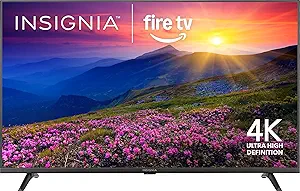
INSIGNIA 50" Class F50 Series LED 4K UHD Smart Fire TV with Alexa Voice Remote (NS-50F502NA26)
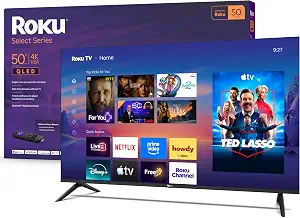
Roku 50-Inch Select Series Smart TV 2026-4K (2160p) QLED TV
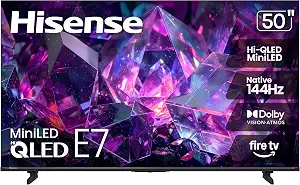
Hisense 50" E7 Cinema Series Hi-QLED Mini-LED 4K UHD Smart Fire TV (50E7SF)
Best 50 In Tv Buying Guide — Black Friday Deals 2026
A 50-inch TV shortlist is most useful when it answers practical questions: which interface do you want to navigate, how many devices will you connect, and which screen specifications matter for your viewing routine? The three options here all offer 4K resolution, but they differ in refresh rate, display technology, ports, and operating system. Those distinctions can help narrow the choice before Black Friday offers enter the picture. Treat each product’s stated features as a checklist, then verify that a live listing matches the model you intended to consider. No promotion alone can tell you whether a TV suits your room or equipment.
INSIGNIA 50" Class F50 Series LED 4K UHD Smart Fire TV with Alexa Voice Remote (NS-50F502NA26)
Check Price on Amazon
The Insignia is the Best Budget choice in this guide for someone who wants a 50-inch 4K set and values the included Fire TV identity and Alexa Voice Remote named in the product description. “Best Budget” is an editorial category label, not a claim that this model has the lowest price or a particular discount. Its listed specifications give shoppers a useful baseline: 4K resolution, a 60-hertz refresh rate, HDR10 support, and FireOS. Consider whether that combination covers the features you actually want before comparing any Black Friday offer.
FireOS may make this a better fit for a shopper who prefers that interface, while another household may favor Roku OS. That is a preference to settle for yourself, not a performance judgment implied by the operating-system names. The Alexa Voice Remote is part of the stated product name; if that detail matters to your purchase, verify that the listing identifies the same product and remote rather than relying on a broad search result. Bluetooth and Wi-Fi are also listed, giving you two wireless technologies to consider alongside your planned setup.
Three HDMI ports help set expectations when you are deciding which wired devices will connect directly to the television. Count your intended connections and decide whether that number suits the listed port total; do not assume that every household will need the same arrangement. The 50-inch screen size and 4K resolution establish the basic screen format, while HDR10 is the specifically listed HDR format. Keeping those details separate makes it easier to compare this model with options that provide different display specifications.
For Black Friday shopping, this model can serve as a useful candidate if your priorities center on a 4K screen, FireOS, and the stated remote rather than on a higher listed refresh rate or a four-port count. That is a decision framework, not a conclusion about price or performance. Check the exact model number, NS-50F502NA26, on the offer you are considering, and make sure its terms and included variant match your shortlist. If the feature set fits your viewing habits and connections, it deserves consideration; if not, a discount would not resolve the mismatch.
Key specs
| Resolution | Resolution 4K |
| Refresh rate | Refresh Rate 60 hertz |
| HDR format | HDR Format Supported HDR10 |
| Operating system | Operating System FireOS |
| HDMI ports | Total Number of HDMI Ports 3 |
| Screen size | Screen Size 50 inches |
| Wireless technology | Wireless Technology Bluetooth, Wi-Fi |
Roku 50-Inch Select Series Smart TV 2026-4K (2160p) QLED TV
Check Price on Amazon
The Roku option is the Best Overall pick for shoppers who want a 50-inch 4K QLED model with Roku OS and a generous listed connection count. That label is an editorial way to organize this shortlist, not a claim of measured superiority. Its 60-hertz refresh rate gives you a clear specification to weigh against your own priorities: if you mainly want a 4K set for everyday viewing and prefer to decide on a platform as part of the purchase, those details make this a straightforward candidate to investigate.
Roku OS may be the deciding factor if you already know that you want to use that television interface. The product also lists Bluetooth and Wi-Fi, so wireless connectivity is part of its stated feature set. Think about how you expect to use the set in your home rather than assuming that a platform name or connection label guarantees a particular experience. If you are comparing it during Black Friday, check that the listing actually identifies this Select Series model and not a different Roku television with a similar screen size.
Four HDMI ports are useful information when you are planning a setup with several devices that use HDMI. Before buying, write down what you intend to connect and compare that list with the port count; the fact does not tell you what is currently plugged into your other equipment or whether you need extra accessories. The listed VESA mount standard is 200 x 100 mm, a detail to check against the mount you plan to use. Confirm the mount’s requirements rather than treating a shared screen size as proof of fit.
The combination of 4K resolution, QLED in the product name, Roku OS, and four HDMI ports gives this set several distinct reasons to make a shortlist. None of those facts alone establishes picture quality in your room or tells you which apps or inputs you will use most. During Black Friday, compare the exact model and the complete offer details with the other candidates, then ask whether the platform, connection plan, and mounting specification suit your needs. Choose this one if those listed characteristics align with your priorities—not simply because a deal headline calls it an overall pick.
Key specs
| Resolution | Resolution 4K |
| Refresh rate | Refresh Rate 60 hertz |
| Screen size | Screen Size 50 inches |
| HDMI ports | Total Number of HDMI Ports 4 |
| Operating system | Operating System Roku OS |
| Wireless connectivity | Wireless Technology Bluetooth, Wi-Fi |
| VESA mount | VESA Mount Standard 200 x 100 mm |
Hisense 50" E7 Cinema Series Hi-QLED Mini-LED 4K UHD Smart Fire TV (50E7SF)
Check Price on Amazon
The Hisense is the Best for Mini-LED and high-refresh-rate features selection. That label points directly to two listed characteristics—Mini-LED backlighting and a 144-hertz refresh rate—rather than suggesting that every shopper needs them or that they prove a measured advantage. It also offers 4K resolution on a 50-inch screen. If you are considering it for a viewing routine where those specifications are priorities, they give you a focused basis for comparing it with the 60-hertz alternatives in this guide.
The product name identifies it as a Hi-QLED Mini-LED model, and the specification record confirms Mini-LED backlighting. Read those as separate display details, not as a guarantee of a particular image in your room. A shopper focused on the stated refresh rate may place more weight on that number; someone who mostly wants a 50-inch 4K television may decide that other differences matter more. The right question is how each listed feature fits your intended use, not whether a longer specification list automatically makes the better choice.
FireOS is the operating system, and AirPlay is the listed screen-mirroring technology. Those details may be especially relevant if you already have a preference about the television interface or want to consider a stated mirroring option. The set also lists four HDMI ports, which gives you a concrete count for planning connected devices. Its speaker maximum output power is 20 watts; treat that as a specification to compare with your needs, not as a prediction of how it will sound in a particular room.
When a Black Friday offer makes this model catch your eye, check that it is the 50E7SF and that the listing still matches the features you prioritized. A headline may not answer whether the Mini-LED backlight, 144-hertz refresh rate, FireOS, or port count is important for your own setup. Compare the exact offer against the Roku and Insignia options without assuming that a higher refresh-rate figure or a named display technology settles every viewing question. Choose this set when its distinctive listed features are the ones you actually want to prioritize.
Key specs
| Screen size | Screen Size 50 inches |
| Resolution | Resolution 4K |
| Refresh rate | Refresh Rate 144 hertz |
| Backlight | Display Backlight Technology Mini-LED |
| HDMI ports | Total Number of HDMI Ports 4 |
| Operating system | Operating System FireOS |
| Audio output | Speaker Maximum Output Power 20 watts |
| Screen mirroring | Screen Mirroring Technology AirPlay |
Start with the viewing routine, not the sale banner
Before opening Black Friday listings, picture the ordinary situations in which this TV will be used. Is your main priority a 50-inch 4K screen, a particular operating system, a stated refresh rate, or a connection plan for other devices? Answering that question makes the product differences more useful. All three options list 4K resolution, so that shared fact may not settle the decision. The Roku and Insignia models list 60-hertz refresh rates, while the Hisense lists 144 hertz. Decide whether that distinction matters to your intended viewing instead of treating the higher figure as an automatic requirement.
Display terms also deserve individual consideration. The Insignia lists HDR10 support; the Hisense lists Mini-LED backlighting and is described as Hi-QLED Mini-LED; the Roku product name identifies it as QLED. These are not interchangeable descriptions, and the available facts do not establish how any set will look in your specific room. Use the terms to identify what to investigate and compare, then keep expectations grounded in the listed information. Your shortlist should reflect the features you care about—not every label that appears in a product title.
Once you have priorities, Black Friday can be a time to compare matching offers rather than to invent new requirements. If a candidate meets your chosen criteria, verify its exact model and variant on the live listing. If it does not, a promotional headline should not make you overlook the difference. This simple order—routine first, specifications second, offer details last—helps prevent a deal from becoming the reason for a purchase rather than a final check on a decision you already understand.
Choose the interface you expect to return to
The listed operating systems provide an easy way to separate these choices by preference: Roku OS on the Roku Select Series, and FireOS on both the Insignia and Hisense. A name alone cannot tell you which interface you will like, so think about what you want to navigate and what matters to the people who will use the TV. If you already favor one of these systems, that preference can be a sensible shortlist filter. If you do not, avoid assuming that one platform is better simply because it appears on a particular model.
The Insignia product name also specifies an Alexa Voice Remote, while the supplied facts identify its operating system as FireOS. The Hisense lists AirPlay as its screen-mirroring technology. Those are different details that could matter for different reasons: one shopper may care about the named remote, while another may want to account for the mirroring option. Do not infer additional functions, supported services, or compatibility beyond what is stated. Instead, decide which listed features are relevant and confirm that the exact item on the offer page matches.
As Black Friday approaches, platform preferences can keep comparisons focused when several televisions seem similar on screen size and resolution. Compare the actual product descriptions and model identifiers, not just a retailer’s short title. A listing that says 50-inch or 4K does not by itself show that it is the same model you shortlisted. If the interface is a deciding factor, make sure it is explicitly stated for the exact product you are considering, then weigh that choice alongside the display and connection details.
Make a port plan before deciding between models
Count the devices you expect to connect directly, then compare that list with the stated HDMI port count. The Insignia lists three HDMI ports; both the Roku and Hisense list four. That is a concrete difference, but it does not dictate what any individual household needs. You might have a short connection list, or you may need to plan carefully around several devices. The useful step is to map your own equipment to the number provided instead of assuming a particular port count is automatically sufficient.
Wireless details can also form part of the planning conversation. Bluetooth and Wi-Fi are listed for the Roku and Insignia. The facts supplied for the Hisense do not list those technologies, so do not take that omission as proof that a feature is absent. If a particular wireless capability matters to your setup, verify it on the exact live product listing before checkout. Keep that verification separate from the HDMI count: they answer different questions about how you intend to connect and use the set.
During Black Friday, it is easy to focus on a headline and postpone setup questions until later. Instead, make a small checklist before comparing offers: devices to connect, the stated HDMI count, any wireless details you need confirmed, and the specific model. That list will help you notice a mismatch even when two product titles share familiar terms such as 50-inch and 4K. It also prevents you from assigning importance to a feature you will not use, while leaving room to verify a feature that is essential to your own arrangement.
Read mounting and audio details as practical checks
If you plan to mount the television, check the mounting information rather than relying on screen size as a guide. The Roku listing specifies a VESA mount standard of 200 x 100 mm. That fact gives you something concrete to compare with the mount you intend to use, but it does not establish that your mount is suitable. Verify its requirements against the exact television and your installation plan. For the other models, the supplied facts do not provide a VESA measurement; check the live listing or product documentation if that detail is necessary for your decision.
Room planning also means thinking about where the screen will sit and what else needs to fit around it. A 50-inch screen is listed for each of these products, but the supplied information does not give the complete dimensions of the television or its stand. Measure the intended space using reliable product details before making a fit decision. Avoid treating the screen-size figure as the full outside measurement. This is especially useful when comparing Black Friday offers quickly, because the matching screen size does not guarantee identical physical layouts.
The Hisense record lists speaker maximum output power of 20 watts. Keep that figure in its proper role as a stated specification; it does not tell you how the audio will come across in your room. The other records here do not supply an equivalent audio figure, which is not a basis for assuming anything about their sound. If audio information is important to you, look for comparable details on the exact listings. A careful fit and audio check can help make a deal comparison more complete without turning missing information into a claim.
Use Black Friday to confirm a match, not create one
A useful Black Friday comparison begins with the exact product, not a broad label such as “50-inch 4K TV.” Check the model name or number, then confirm that the offer page describes the same television and the features you used to shortlist it. The Insignia model number is NS-50F502NA26, and the Hisense model number is 50E7SF; use those identifiers when applicable. The Roku listing is identified here as the 2026 Select Series. Names and model details help distinguish candidates that may otherwise look similar in a search.
Next, evaluate the offer information itself without assuming a promotion is active or that every listing represents the same variant. Compare the complete details presented for the specific item you plan to buy, and make sure the specifications relevant to your decision are present. This guide does not establish a sale price, discount, inventory status, or offer terms. Those can only be checked on the live listing. If the current offer is unclear about an important feature or model detail, pause and verify it rather than filling the gap with an assumption.
Finally, compare the candidate with your own shortlist criteria. A Roku preference, the Insignia’s named remote, the Hisense’s Mini-LED backlight, refresh rate, or the port count may be more important to you than a general deal label. Black Friday is most useful here as a moment to check whether the exact offer fits your plans. It is not a reason to buy a television whose interface, connections, mounting details, or display specifications you have not considered. Keep the decision tied to the features you actually expect to use.
Make your Black Friday choice
The best 50-inch TV for your home depends on which listed differences matter to your routine. Roku OS, FireOS, HDMI counts, refresh rates, display descriptions, and mounting details each answer different questions; none replaces checking the exact model. Use Black Friday to compare a matching live offer with a shortlist you have already built, and verify any details that the supplied specifications do not resolve. When the product and offer both match your needs, you can make a more deliberate choice without treating a promotion as proof that the television is right for you.