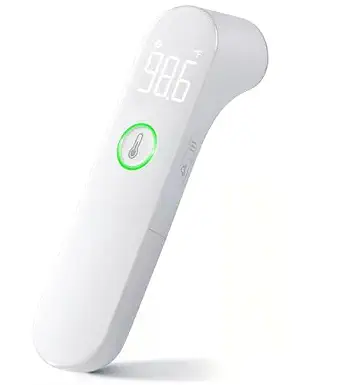
Viproud Thermometer for Adults and Kids
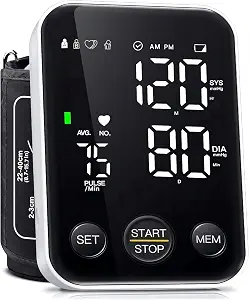
Oklar Blood Pressure Monitor Upper Arm BP Machine
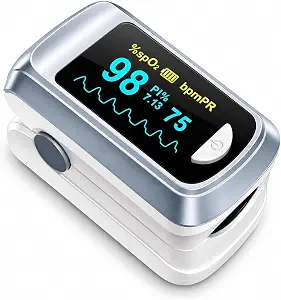
Fingertip Pulse Oximeter
Best Home Health Care Buying Guide — Black Friday Deals 2026
Home health care shopping works best when the device starts with a clear job: checking temperature, tracking blood pressure, or viewing pulse and SpO2 information. These products answer different questions, so a Black Friday shortlist should begin with the reading you actually plan to take rather than the broad appeal of a sale event. Then consider who will use the device, how its controls and display fit that person, and whether its memory or power setup suits the household. The listed features can help narrow the choice, but the exact product variant and offer still need checking on the live listing. Use home readings as information to discuss with a health professional, not as a substitute for medical advice.
Viproud Thermometer for Adults and Kids
Best Overall is the editorial pick here for shoppers who want a temperature-checking device without contact between the thermometer and the person being checked. Its non-contact measurement method may suit a household routine where users prefer not to position a device against the body. The listed response time is 1 seconds, and the temperature range is given with endpoints of 89.6 °F and 109.2 °F. Those details help establish whether the stated measurement format matches the task you have in mind; they do not establish what a particular reading means medically.
For an everyday routine, consider who will take the reading and whether a non-contact method is a useful fit for that person. The thermometer stores 35 sets of memory, which can help someone review earlier readings on the device rather than relying only on recollection. It also switches between ℉ and ℃. That flexibility can be useful when household members have a preferred unit, though a stored reading should still be interpreted with appropriate care and any relevant clinical guidance.
The package requires 2 AAA batteries, which are included, and the device has a 30 seconds auto shut-off function. Before a Black Friday purchase, check that the live listing is for this exact thermometer and confirm the included-battery detail and listed range on the selected offer. The Best Overall label is an editorial choice among the products in this guide, not a claim of measured superiority. Its strongest reason for consideration is the combination of a non-contact method, unit switching, and memory; a shopper who needs another kind of reading should choose a device designed for that task instead.
Key specs
| Measurement method | Non-Contact |
| Response time | 1 seconds |
| Temperature range | 89.6 °F |
| Upper temperature range | 109.2 °F |
| Batteries | 2 AAA batteries required. (included) |
| Memory | 35 sets of memory storage |
| Temperature units | ℉/℃ switchable |
| Auto shut-off | 30 seconds auto shut-off function |
Oklar Blood Pressure Monitor Upper Arm BP Machine
Check Price on Amazon
Best for shared blood pressure tracking is the editorial label for this upper-arm monitor because its memory is organized for two users, with 120 readings stored per user. That arrangement gives a household a way to keep the two users’ saved readings distinct on the device. It is a practical point to weigh if more than one person expects to use the monitor, but saved numbers are records to review thoughtfully, not diagnoses or a replacement for guidance from a health professional.
The monitor uses one-button operation and has a backlit LED screen with clear digits. It is listed as able to provide readings within 1 minute. Those details give shoppers a straightforward basis for thinking about the interface: would a single-button control and illuminated display work for the intended user and the place where the monitor will be used? The cuff range is 8.7 – 15.7 inches (22-40 cm), so check the intended user’s fit against the listed range before deciding. Do not assume a fit from the product category alone.
Power is listed as 3AA batteries or a Type-C interface, while the product is explicitly not rechargeable. That distinction matters when planning where the device will live and how the household expects to power it. For a Black Friday comparison, verify that the selected listing is this upper-arm model, then check the cuff range, memory arrangement, and power details on that exact offer. The Best for shared blood pressure tracking label reflects those listed memory features, not a claim that the monitor is the right choice for every person or every care plan.
Key specs
| Operation | one-button operation |
| Display | backlit LED screen with clear digits |
| Reading time | get readings within 1 minute |
| Memory | Supports two users, storing 120 readings per user |
| Power | 3AA batteries or a Type-C interface |
| Rechargeability | This product is not rechargeable |
| Cuff range | 8.7 – 15.7 inches (22-40 cm) |
Fingertip Pulse Oximeter
Best Budget is the editorial choice for this fingertip pulse oximeter among the products in this guide. Its bright screen shows SpO2, pulse rate, and signal strength, while a waveform bar graph offers visual confirmation of pulse strength. That makes the listed display information central to the decision: consider whether those are the readings and visual cues you want available in a home-care routine. The device is not a thermometer or blood pressure monitor, so it belongs on a shortlist only when those displayed measures match the task.
The controls are described as one-button operation. The product measures 2.25 x 1.2 x 1.25 inches and weighs 2.4 ounces, and the listing includes 1x Lanyard for easy carrying. These details may help a shopper decide how the form factor and carrying accessory fit the intended routine, without assuming anything about performance beyond the listed facts. It requires 2 AAA batteries, which are included, and auto power-off is listed as a battery-saving feature.
For a Black Friday purchase, check that the offer is for this fingertip model and review the screen information, included accessory, and battery details on the selected listing. The Best Budget label is an editorial choice, not a promise about price or a market-wide award; no sale amount is assumed here. Think about whether the intended user can operate the one-button control and read the display comfortably. As with any home health information, treat a displayed value as information to consider in context and seek professional guidance when needed.
Key specs
| Display | Bright screen clearly shows SpO2, pulse rate, and signal strength |
| Pulse indicator | The waveform bar graph provides visual confirmation of pulse strength |
| Operation | One-button operation |
| Power saving | Auto power-off preserves battery life. |
| Dimensions | 2.25 x 1.2 x 1.25 inches |
| Weight | 2.4 ounces |
| Batteries | 2 AAA batteries required. (included) |
| Included accessories | 1x Lanyard for easy carrying |
Start with the reading your routine calls for
Make the first decision about the type of information you need. A temperature check points toward the non-contact thermometer; blood pressure tracking points toward the upper-arm monitor; and a request for SpO2, pulse rate, and signal strength points toward the fingertip oximeter. Their functions are distinct, so a broad search for home health care products can produce a misleadingly similar shortlist if you do not name the intended reading first. Match the device to the planned task, not to whichever listing looks most feature-rich.
Next, picture the actual person and moment of use. Ask whether a non-contact measurement method is desirable, whether the person can use a one-button control, or whether the screen’s listed information is relevant to the household’s routine. These are practical questions, not claims that one device suits everyone. The Black Friday window can make it tempting to decide quickly, but a sale label does not change what a device measures. Keep the reading you need at the center of the choice, then compare only devices that serve that purpose.
Screen out fit and interface mismatches
After identifying the reading, check the details that could make the device a poor practical fit. For the blood pressure monitor, compare the stated cuff range of 8.7 – 15.7 inches (22-40 cm) with the intended user’s needs. Its backlit LED screen with clear digits and one-button operation are also worth considering in light of the person who will use it. Do not treat a general product name as proof that the cuff or controls will suit a particular household member.
For the thermometer, ask whether the non-contact method and switchable ℉/℃ display match the household’s preferences. For the oximeter, consider whether the bright screen’s SpO2, pulse rate, and signal-strength display is the information sought. Those questions help turn Black Friday browsing into a more useful comparison: the relevant issue is whether the actual device fits the user and task. If an important detail is unclear on the live offer, pause and verify it rather than filling in the gap from assumptions.
Give saved readings a defined purpose
Memory can be useful when it answers a real record-keeping need. The thermometer stores 35 sets of memory, while the blood pressure monitor supports two users and stores 120 readings per user. Before choosing between them, ask who will review stored information and how it will be used. A memory feature may help keep readings available on the device, but it does not by itself explain a trend or determine what action to take.
The pulse oximeter’s listed facts focus on its screen and pulse-strength waveform bar graph rather than a stated memory capacity. Do not assume it stores readings simply because another device in the shortlist does. In a Black Friday comparison, distinguish what a listing explicitly says from what you would merely like the product to do. Keep home readings in context and follow advice from a qualified health professional about monitoring and next steps. A clear record-keeping purpose is more useful than selecting a device for a feature that may not support your routine.
Plan for power and the place the device will live
Power arrangements can affect whether a device is convenient in the spot where you plan to use it. The thermometer requires 2 AAA batteries, included, and lists a 30 seconds auto shut-off function. The oximeter also requires 2 AAA batteries, included, and lists auto power-off as a battery-saving feature. Keep those details in mind when considering where the device will be stored and how the household will handle batteries.
The blood pressure monitor lists 3AA batteries or a Type-C interface as power options and states that it is not rechargeable. Read those points together instead of assuming that a Type-C interface means rechargeable operation. During Black Friday shopping, verify the power description on the exact selected offer and consider which arrangement works for your intended setup. This is a practical check, not a prediction about battery life or what accessories a particular seller includes beyond the facts shown.
Make the Black Friday comparison about the exact offer
Treat Black Friday as a time to compare listings carefully, not as evidence that a product is discounted. Start by matching the offer to the exact model and task in your shortlist. Then review the relevant details: the thermometer’s non-contact method and stated range, the blood pressure monitor’s cuff range and two-user memory, or the oximeter’s displayed measures and included lanyard. Check that the selected variant is the one whose facts informed your decision.
Compare the actual offer information that is visible when you shop, including the selected product and its stated contents. Do not infer a savings amount, promotion, included accessory, or availability from the event label. If an essential detail is absent or unclear, seek clarification before purchasing rather than treating a general product description as confirmation. This final check keeps the decision tied to what the listing actually offers and to the home-care task you identified.
Make your Black Friday choice
A useful home health care purchase begins with a specific question: temperature, blood pressure, or pulse and SpO2 information. Then check the intended user’s fit with the controls and display, decide whether memory matters, and plan for the listed power setup. The thermometer, upper-arm monitor, and fingertip oximeter each offer a different set of stated features, so the right shortlist depends on the household’s intended routine. Black Friday can be a convenient moment to compare, but verify the exact offer and variant rather than assuming a promotion. Use readings responsibly and bring questions about their meaning to a health professional.