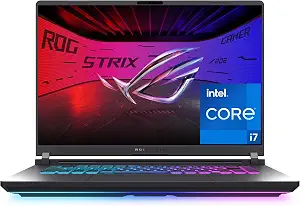
ASUS ROG Strix G16 (2025) Gaming Laptop
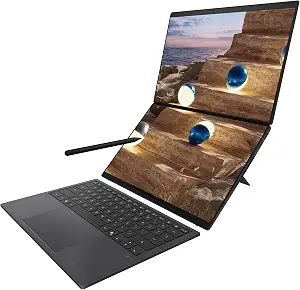
ASUS Zenbook Duo Laptop (2026)
Best Asus Laptop Buying Guide — Black Friday Deals 2026
Choosing an ASUS laptop starts with a more useful question than “Which one is best?”: what do you want the computer to make easier? The Vivobook 15, ROG Strix G16, and Zenbook Duo point toward different routines, from general computing to gaming-focused use and a two-screen workspace. Their listed specifications offer concrete ways to narrow the choice, but they do not establish which model is right for every shopper. During Black Friday, compare the exact model and configuration shown in the live offer with the details here; no particular promotion or price is assumed. The guide below connects each laptop’s stated features to practical decisions, so you can decide what matters before weighing an offer.
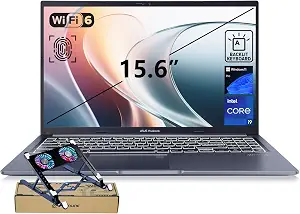
ASUS Vivobook 15 Laptop
Best Budget is the editorial label for the ASUS Vivobook 15 in this group. It is a way to identify the option to consider when your priority is a conventional laptop setup with a substantial listed memory and storage configuration, not a claim that it is the least expensive offer or a market-wide award. The stated Intel Core i9-13900H processor, 32 GB of memory, and 1 TB of storage give you a specific configuration to check against the work you expect to do. Ask whether those components and Windows 11 Pro match your needs rather than assuming that a label settles the decision.
The 15.6" FHD display has a resolution of 1920 x 1080 pixels. That familiar single-screen arrangement may be a natural fit if you want one display for documents, browsing, and other everyday tasks, without making a second screen the defining part of your setup. A backlit keyboard is another practical listed feature to weigh if you sometimes work in dimmer surroundings; the facts do not specify its brightness or other keyboard characteristics. The fingerprint reader is worth noting if that is a detail you want in your laptop, while you should check the live listing for any additional information you require.
For a Black Friday decision, treat this Vivobook as a candidate for a straightforward personal or work computer, then compare its precise configuration and operating system with the offer in front of you. It may be less compelling for someone whose main requirement is a dedicated gaming graphics configuration or a built-in dual-display workspace, since those are the distinct directions represented by the other two products here. That is a difference in the listed feature mix, not a judgment about unlisted capabilities. Choose this model when its screen format, Windows 11 Pro, keyboard, biometric feature, and component details align with your own checklist.
Key specs
| Processor | Intel Core i9-13900H |
| Display | 15.6" FHD |
| Resolution | 1920 x 1080 pixels |
| Memory | 32 GB |
| Storage | 1 TB |
| Operating system | Windows 11 Pro |
| Keyboard | Backlit Keyboard |
| Biometrics | Fingerprint Reader |
ASUS ROG Strix G16 (2025) Gaming Laptop
Best Overall is the editorial label assigned to the ASUS ROG Strix G16 (2025) among these featured choices. It is not a test result or a statement that it is the best laptop for every buyer. Its listed combination is notably oriented toward shoppers who place graphics and display characteristics high on their shortlist: NVIDIA GeForce RTX 5060 graphics and a 16” FHD+ 16:10 display with a 165Hz/3ms specification. If gaming is a central use, those are relevant facts to compare with the requirements of the games and applications you intend to use; the specifications alone do not promise a particular experience.
The Intel Core i7 Processor 14650HX, 16GB DDR5 memory, and 1TB Gen 4 SSD complete the stated component picture. Consider them together rather than treating the processor name or graphics label as the whole decision. The display’s aspect ratio, refresh-rate and response-time details may also matter to how you prioritize screen layout and responsiveness, but they are not a substitute for confirming the exact configuration you are considering. Windows 11 Home and Wi-Fi 7 are listed as well, so include both in your software and wireless checklist.
This model’s role in a Black Friday comparison is clearest when you already know that gaming-oriented graphics and the stated screen details are important to you. If your priority is a conventional general-use laptop, the Vivobook’s listed configuration may be a more relevant point of comparison; if you want two integrated displays, the Zenbook Duo addresses that workflow more directly. These are distinctions between the facts provided, not measured rankings. Before choosing the ROG Strix, match the exact model name and each configuration detail in the live offer to your needs, and avoid assuming that a similar-looking listing has the same component mix.
Key specs
| Display | 16” FHD+ 16:10 165Hz/3ms |
| Graphics | NVIDIA® GeForce RTX™ 5060 |
| Processor | Intel® Core™ i7 Processor 14650HX |
| Memory | 16GB DDR5 |
| Storage | 1TB Gen 4 SSD |
| Wireless | Wi-Fi 7 |
| Operating system | Windows 11 Home |
ASUS Zenbook Duo Laptop (2026)
Check Price on Amazon
Best for multi-screen workflows is the editorial label for the ASUS Zenbook Duo Laptop (2026). Its defining listed feature is a pair of 14” OLED 3K 144Hz touch displays. That arrangement gives shoppers a different question to answer: would two integrated screens serve the way you organize your work, or would one display be enough? The format may appeal if your routine involves keeping separate content visible, such as a main task alongside reference material. It does not guarantee that a particular application will arrange itself in a preferred way, so consider your own workflow rather than assuming how software will behave.
The stated Intel Core Ultra 9 Processor 386H, 32GB RAM, and 1TB SSD provide useful configuration details to check alongside the display setup. WiFi 7 is listed for wireless connectivity. For a desk setup, the listed ports are 2× Thunderbolt 4, 1× USB 3.2 Gen 2, and 1× HDMI 2.1 FRL. Compare those exact connection types with the devices and cables you plan to use; do not infer anything about unlisted ports or compatibility. A sleeve and stylus are included according to the product facts, which may be relevant if those items fit your plans.
During Black Friday, the Zenbook Duo deserves a closer look if the dual-screen layout is the reason you are shopping, rather than simply because the specification sounds distinctive. The Vivobook offers a single listed display, while the ROG Strix emphasizes a graphics and display configuration associated with its gaming-laptop positioning. That contrast helps clarify the choice without implying that one is universally superior. Check that the live offer names the 2026 Zenbook Duo and preserves the display, memory, storage, ports, and included items you expect. Then decide whether its particular workspace arrangement and listed connections solve a real need for you.
Key specs
| Display | Dual 14” OLED 3K 144Hz Touch Display |
| Processor | Intel Core Ultra 9 Processor 386H |
| Memory | 32GB RAM |
| Storage | 1TB SSD |
| Wireless | WiFi 7 |
| Ports | 2× Thunderbolt 4, 1× USB 3.2 Gen 2, and 1× HDMI 2.1 FRL |
| Included accessories | Sleeve and Stylus Included |
Picture the screen arrangement you will actually use
A display specification is most useful when you connect it to where your attention goes during a typical task. The Vivobook 15 lists one 15.6" FHD display at 1920 x 1080 pixels, a familiar format to consider for a single-screen routine. The ROG Strix G16 lists a 16” FHD+ 16:10 panel with 165Hz/3ms details, which gives gaming-focused shoppers more specific screen characteristics to investigate. The Zenbook Duo takes another route with dual 14” OLED 3K 144Hz touch displays. Rather than treating the largest or most elaborate-sounding specification as an automatic winner, ask what you need visible and how you prefer to work.
Try describing a real situation: reading one document at a time, concentrating on a game, or keeping reference content alongside a primary task. These examples are prompts, not claims about how any particular application will behave. A two-display laptop may be worth investigating when separate visible areas matter to your routine; a single display may be the simpler match if that arrangement is not important. During Black Friday, use the exact screen wording to distinguish offers and variants. Check the model name as well as the display details, and do not assume that a listing with a similar title has an identical screen.
Decide how much the graphics focus matters
Start with the reason you are considering a laptop with a graphics specification. The ROG Strix G16 lists NVIDIA GeForce RTX 5060 graphics, making it the clearest choice to investigate here if graphics are central to your intended use. That fact does not establish performance in a particular game or application. Look at the requirements and information for the software you plan to use, then decide whether this model’s stated graphics configuration belongs on your shortlist. If graphics are a secondary consideration, avoid letting that single detail distract from the rest of your needs.
The other products present different feature mixes: the Vivobook lists an Intel Core i9-13900H processor and a 15.6" FHD screen, while the Zenbook Duo centers on its dual-display arrangement and lists an Intel Core Ultra 9 Processor 386H. Those details can help you identify which type of computer to investigate, but the provided specifications do not support a universal performance ranking. A Black Friday offer should be compared on its exact model and configuration, not on a broad label or one headline component. If a detail that matters to you is missing from the offer, seek confirmation before treating it as included.
Give memory, storage, and software a practical role
Memory and storage are easier to compare when you know what you expect to keep open and save locally. The Vivobook and Zenbook Duo each list 32 GB of memory, while the ROG Strix lists 16GB DDR5. Storage is listed as 1 TB for the Vivobook, 1TB Gen 4 SSD for the ROG Strix, and 1TB SSD for the Zenbook Duo. These are stated capacities and descriptions, not guarantees about how much usable space remains or how a workload will perform. Use them to check your own requirements, and confirm any additional detail you need in the current product listing.
The operating systems also differ in the supplied facts: Windows 11 Pro is listed for the Vivobook, and Windows 11 Home for the ROG Strix. No operating system is specified for the Zenbook Duo in the provided details, so do not assume one from the other models. Consider which software environment you require and verify that point on the live offer. For Black Friday, read memory, storage, and operating system as parts of the exact configuration rather than relying on a discount headline or a family name. A careful match is more useful than guessing that two similar listings are interchangeable.
Check connections and extras against your setup
Connections matter when you already know which devices you hope to attach. The Zenbook Duo has a specific listed selection: 2× Thunderbolt 4, 1× USB 3.2 Gen 2, and 1× HDMI 2.1 FRL. Compare those names with the connection requirements of your existing equipment, and verify compatibility where it matters to you. The provided facts do not give a full port list for the other laptops, so neither assume that a needed connection is present nor assume that it is absent. Use the live listing or other product information to resolve any unanswered question before buying.
Small details can be decisive for one shopper and irrelevant to another. The Vivobook lists a backlit keyboard and fingerprint reader; the Zenbook Duo lists a sleeve and stylus as included accessories. Think about whether those particular features match your routine, rather than treating every extra as a reason to choose a model. Wi-Fi 7 is listed for both the ROG Strix and Zenbook Duo, but the product facts do not establish the wireless setup in your home or workplace. On Black Friday, confirm that the offer refers to the exact laptop and included items you intend to purchase.
Use the live offer to verify the precise laptop
A buying guide can help you form a shortlist, but the offer you are considering still needs a careful identity check. Read the full product name and match it to the configuration that matters: for example, the ROG Strix G16 (2025), the Zenbook Duo Laptop (2026), or the Vivobook 15. Then check the details that drove your choice, whether that is graphics, a dual-display layout, a particular operating system, memory, storage, or a listed accessory. Do not treat a product-family name by itself as proof that every offer has the same configuration.
Black Friday can make it tempting to focus on a headline before confirming what it applies to. This guide does not establish that any item is discounted, available, or offered at a particular price. Compare the actual terms and configuration shown when you shop, and decide whether the offer fits your requirements. If the page leaves a material question unanswered, such as a needed connection or the operating system for the Zenbook Duo, verify it rather than filling in the gap yourself. That process keeps the decision tied to facts instead of assumptions.
Make your Black Friday choice
The right ASUS laptop here depends on the work pattern you want to support: the Vivobook 15 offers a conventional single-screen configuration, the ROG Strix G16 brings a listed graphics-focused mix, and the Zenbook Duo is built around two displays. Treat the recommendation labels as a starting point, then weigh the specific features that matter to you. For Black Friday, match the live offer to the exact model and configuration before deciding whether it is a fit. A careful comparison of your needs and the supplied details is more dependable than assuming a headline or label answers every question.