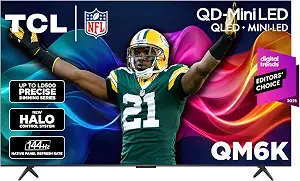
TCL 55 Inch QM6K Series QLED Mini LED 4K HDR Smart Google TV, 55QM6K, 144Hz
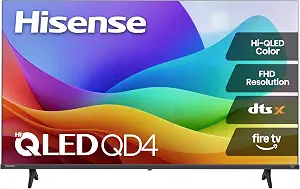
Hisense 40-Inch Class QD4 Series Hi-QLED FHD Smart Fire TV (40QD4QF)
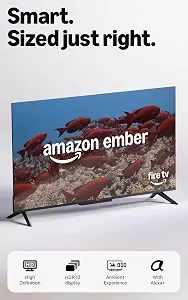
Amazon Ember 32" 2-Series with Fire TV
Best Early Tv Buying Guide — Black Friday Deals 2026
An early television shortlist is most useful when it starts with the role you want the screen to play, not an assumption that a seasonal offer is automatically worthwhile. These choices span a large 4K set with picture and audio specifications to weigh, a 40-inch 1080p Fire TV, and a compact 720p Fire TV model. Their differences make it possible to prioritize screen format, platform, sharing, and controls before looking at any Black Friday listing. Treat the labels as editorial descriptions of these options, then check the live offer against the exact model and the features that matter in your home.
TCL 55 Inch QM6K Series QLED Mini LED 4K HDR Smart Google TV, 55QM6K, 144Hz
Check Price on Amazon
Best Overall is an editorial fit for a shopper who wants a large-screen, higher-resolution option with several picture details to consider together. The TCL combines a 55-inch screen and 4K resolution with QLED Mini LED display technology. Its listed 144hz Native Refresh Rate may be relevant if motion handling is part of your shortlist; it is a specification to weigh against your own viewing priorities, not a promise that every source will use it. The combination makes this a different kind of consideration from the smaller, lower-resolution sets here.
HDR support spans Dolby Vision, HDR10+, HDR10, and HLG. If you compare programs and devices by the HDR formats they use, that range gives you specific formats to check against your planned viewing. The TV also lists an ONKYO 2.1 Speaker System with built-in subwoofer, which may appeal if you want to factor the included audio configuration into your decision. It is more useful to evaluate that detail in the context of your room and sound preferences than to assume it replaces any particular separate audio setup.
Google TV is named in the product title, and screen mirroring lists AirPlay 2 and Google Cast. Those details can help narrow the choice if you want a Google TV set or expect to share content from compatible devices using one of those options. Four HDMI ports are another practical point to count against the equipment you plan to connect. For Black Friday, compare the offer with the exact 55QM6K model and its listed configuration rather than treating a similar TCL name as interchangeable. This Best Overall designation reflects the breadth of features in this guide, not a test result or a claim of market-wide superiority.
Key specs
| Screen size | 55 inches |
| Resolution | 4K |
| Native refresh rate | 144hz Native Refresh Rate |
| HDR formats | Dolby Vision, HDR10+, HDR10 & HLG |
| Audio system | ONKYO 2.1 Speaker System with built-in subwoofer |
| HDMI ports | Total Number of HDMI Ports 4 |
| Screen mirroring | AirPlay 2, Google Cast |
| VESA mount | 300 x 300 mm |
Hisense 40-Inch Class QD4 Series Hi-QLED FHD Smart Fire TV (40QD4QF)
Check Price on Amazon
Best for a 40-inch 1080p setup describes a shopper whose shortlist already calls for that screen size and resolution. The Hisense QD4 is a 40-inch Hi-QLED model with 1080p resolution and a 60 hertz refresh rate. Those are useful starting points for deciding whether this format suits the intended room and viewing habits. If your main priority is specifically a 40-inch screen at 1080p, those details make the model easy to assess without assuming that a larger or higher-resolution television is automatically the better match.
FireOS is the listed operating system, while Bluetooth 5.0 is a specified connection feature. Consider how the named platform fits the way you expect to navigate and what role Bluetooth plays in your setup; the supplied facts do not identify particular compatible devices or services, so check those separately if they are essential. The television also has three HDMI ports. Counting the equipment you expect to connect can help you decide whether that port total is appropriate, without guessing about which devices or accessories you own.
The VESA mount standard is listed as 200 x 100 mm, a detail to compare with the mounting plan you have in mind. Best for a 40-inch 1080p setup is a description of its fit with that stated screen format, not a claim that it outperforms the other options. As Black Friday listings appear, verify that the offer names the 40QD4QF rather than a nearby size or another QD4 configuration. Then weigh the exact model, platform, refresh rate, ports, and mounting standard against the requirements you set before browsing. That keeps the decision anchored in useful specifics instead of broad seasonal language.
Key specs
| Screen size | 40 inches |
| Resolution | 1080p |
| Refresh rate | 60 hertz |
| Operating system | FireOS |
| Bluetooth | Bluetooth 5.0 |
| HDMI ports | 3 |
| VESA mount standard | 200 x 100 mm |
Amazon Ember 32" 2-Series with Fire TV
Best Budget is the editorial label for this compact Fire TV option; it does not assert a price or confirm that a discount is available. The Amazon Ember 32-inch 2-Series uses a 720p HD display. That makes it a distinct choice for someone whose priority is a smaller screen and who is comfortable considering this resolution for the intended viewing role. Rather than judging it against a larger screen on size alone, decide what you expect to watch and where the display will sit, then ask whether its stated format fits that job.
The listing specifies Wi-Fi 6 support and a new quad-core processor. It also describes a voice remote: press its button to search for what to watch across apps and manage a smart home. Built-in sensors wake the display when you enter. Those features may be relevant if voice interaction or the described wake behavior is part of your routine. The facts do not establish which apps, smart-home devices, or services will suit your circumstances, so check those details separately instead of assuming broad compatibility.
Two HDMI inputs are listed for connecting accessories, and AirPlay is described as a way to share content from compatible devices. These specifics give you a simple way to check whether the Ember’s connections and sharing option suit your planned setup. Best for voice search and smart-home control is a distinct, feature-based description of its stated remote function, not a measured ranking. During Black Friday, match any offer to the exact Amazon Ember 32-inch 2-Series listing and examine the configuration rather than inferring value from a headline. If the smaller display, 720p resolution, and named controls fit your priorities, it can earn a place on your shortlist; if they do not, a promotion alone is no reason to change those priorities.
Key specs
| Resolution | watch content come to life in HD 720p. |
| Connectivity | with Wi-Fi 6 support and a new quad-core processor. |
| Voice control | Press the voice remote button and talk naturally to find what to watch across your apps, manage your smart home |
| Sensors | Built-in sensors wake the display when you enter |
| HDMI | Connect your favorite accessories with two HDMI inputs. |
| AirPlay | Use AirPlay to share content from compatible devices to your TV. |
Set the screen’s role before opening Black Friday listings
Start by naming the room and the task, not by choosing a television because its promotion sounds urgent. A 55-inch screen, a 40-inch screen, and the 32-inch Ember represent different physical formats. Think about where the screen will go and how large a display makes sense for that place. The supplied facts do not tell you the dimensions of your room or your preferred viewing distance, so those are personal checks to make rather than conclusions to borrow from a listing.
Next, decide what resolution belongs on your must-have list. The TCL is specified as 4K, the Hisense as 1080p, and the Ember as HD 720p. That contrast can help organize your options, but it does not decide the question for every viewer or viewing task. If resolution is a priority, compare the stated format with the content and screen role you have in mind. If size or another feature matters more, make that priority explicit before evaluating Black Friday offers.
Write down your non-negotiables in plain language: for example, a particular screen size, a platform you prefer, or a way to share content. Then use those requirements to narrow the models before you compare offer wording. A promotion is relevant only if it applies to the configuration that meets your needs. This approach keeps the seasonal search focused and makes it easier to distinguish a genuinely suitable listing from one that simply features a familiar product family.
Read motion, HDR, and audio as separate priorities
Picture specifications are most helpful when tied to something you care about. The TCL lists a 144hz Native Refresh Rate, while the Hisense lists 60 hertz. Those are the refresh-rate details provided for these models. Decide whether refresh rate deserves a place near the top of your comparison, and check what the content you expect to watch calls for. Do not assume that the higher listed figure guarantees a particular experience across every source or use.
HDR can also be a decision point rather than a box to tick without context. The TCL lists Dolby Vision, HDR10+, HDR10, and HLG. If the devices or programming you intend to use make HDR format relevant, compare their stated formats with this list. The facts provided here do not specify the formats supported by any separate device or program, so verify those details for your own setup. If HDR is not a priority, give other requirements more weight instead of treating the list as a universal ranking.
Audio deserves its own question. The TCL specifies an ONKYO 2.1 Speaker System with built-in subwoofer. You can consider that configuration when deciding what audio setup you want to account for, but the listing facts do not establish how it will sound in your room or whether it replaces another solution. For a Black Friday comparison, keep picture features and audio details distinct: decide what you value, then confirm the exact model includes the specifications you used to shortlist it.
Choose the navigation and sharing that fit your routine
A television’s named platform may shape your everyday choice as much as its picture specifications. Google TV appears in the TCL’s title, and the Hisense lists FireOS. The Ember is identified as a Fire TV model. If a particular interface is important to you, use that information to direct your comparison, then check any app or service requirements that matter to your household. The records do not list app catalogs or service availability, so avoid assuming that a platform name answers every compatibility question.
Sharing features are more specific. The TCL lists AirPlay 2 and Google Cast for screen mirroring; the Ember describes AirPlay for sharing content from compatible devices. Think about which device you intend to share from and confirm that it is compatible before making this a deciding feature. Do not treat similarly named sharing options as identical, or assume a feature for one model applies to another. The Hisense facts provided here do not specify a screen-mirroring feature.
The Ember’s voice remote is described as a way to find what to watch across apps and manage a smart home by pressing the remote button and speaking naturally. Built-in sensors are also described as waking the display when you enter. These stated functions may matter to someone who values that style of interaction. When comparing Black Friday listings, look for the exact model and feature description you intend to use, rather than letting a general smart-TV label stand in for a check of the controls you care about.
Count connections and confirm the physical plan
Make a short list of the equipment you expect to connect, then compare it with the stated HDMI inputs. The TCL lists four HDMI ports, the Hisense lists three, and the Ember lists two HDMI inputs. This is a practical count, not a recommendation about what any household needs. The relevant question is whether the number suits your planned setup. The records do not identify included cables or detail every connection, so check the product listing for any setup requirement that matters to you.
Mounting details can be checked just as directly. The TCL lists a VESA mount of 300 x 300 mm, and the Hisense lists a VESA mount standard of 200 x 100 mm. Compare the exact stated format with the mounting equipment you plan to use, and verify the match before purchasing. No VESA detail is supplied for the Ember here, so do not infer one from its screen size or from the other models. If mounting is central to your choice, confirm the needed information for that exact model.
Placement can also affect which features you value. A set that will be used with several connected devices makes port count more salient; a screen-mirroring option may matter more if sharing is part of your routine. Keep those choices separate from an offer’s headline. During Black Friday, check that the listing corresponds to the model whose port or mount detail you assessed. That small verification helps prevent a comparison from drifting to a different size or configuration.
Compare Black Friday offers by exact model and need
Treat any Black Friday claim as something to verify on the live listing, not as evidence that a promotion is active or that a particular price is favorable. Start with the full model identity: 55QM6K for the TCL, 40QD4QF for the Hisense, and Amazon Ember 32-inch 2-Series for the compact option. Confirm that the listing names the configuration you meant to compare. Similar product-family wording alone is not enough to establish that the screen size or specifications match your shortlist.
Then review the details that drove your choice. For the TCL, that might mean checking 4K resolution, HDR formats, refresh rate, HDMI count, and the listed audio configuration. For the Hisense, you might prioritize its 40-inch 1080p format, FireOS, or mounting standard. For the Ember, the smaller screen, 720p HD resolution, voice remote description, or AirPlay sharing may be the deciding factor. These are examples of comparison criteria, not claims about which offer is best.
Finally, separate the appeal of a deal from the suitability of the product. Compare the exact offer and variant with your own requirements, and review the live listing for terms or details that are not included in this guide. If the model does not match the needs you wrote down, a Black Friday headline should not turn it into a fit. If it does match, make the decision based on the configuration and information shown for that listing, without assuming an unverified saving, availability, or promotion.
Make your Black Friday choice
The strongest shortlist is the one that reflects how you plan to use the screen: a 55-inch 4K set with several listed picture and audio features, a 40-inch 1080p Fire TV, or a compact 720p model with specified voice and sharing functions. Decide which details matter, check connections and placement, and confirm the exact model before comparing any Black Friday offer. The labels here can help organize the choices, but your requirements—and the live listing’s actual configuration—should make the final call.